More thoughts on the Villa Girasole

My article “The Villa Girasole and the Limits of Biomimicry” is published in the March issue of Italy's Cameracronica magazine, available here.

In it I suggest that Invernizzi’s revolving house probably overheated and that ‘sunflower’ is probably a metaphor that architects ought to give up. I write: “For most buildings on most days, the problem is not solar access, but solar control.”

I should hasten to add that the general concept of Biomimicry in Architecture—learning and applying principles from nature—is a valid area of exploration, and I endorse it when it works. But to practice Biomimicry in Architecture requires a degree of scientific rigor, or if it is purely figurative it should not be expected to succeed on any level other than formal.

Previously I discussed the Villa Girasole here: “Freak Houses Mounted on Turn-tables”

The Solar Decathlon: Back to Irvine

This week the Department of Energy announced that the 2015 Solar Decathlon will again be sited at the Orange County Great Park in Irvine, California (link).  It will run October 8-18, 2015.  Traditionally, the Decathlon was held in Washington, DC, but moved to Irvine for the 2013 contest.

This is a significant and disappointing decision because it confirms that the contest is about solar electricity, not solar heating.  In Irvine in October, the average temperature is 64˚F, practically room temperature!  (In Washington, DC in October, the average temperature is cooler, though still mild at 59˚F.)

I'm a big supporter of solar electricity, to be sure, but passive solar heating ought to be central to the challenge and to the definition of a 'solar house' and a 'net-zero' house.  Most of the places in the US are not like Irvine in October; they have significant heating demands that can be reduced through passive solar design.  To design an 800-square foot house in Irvine that will use net-zero energy for a week in October is frankly not very difficult. 

Why not hold the contest in Minneapolis a month later?  Perhaps because passive solar heating implies the need for thermal mass, which is contradictory to the need for the houses to be lightweight and transportable.  This is the fundamental paradox of the Solar Decathlon.

As I wrote in The Solar House, the Solar Decathlon has always been oriented to the promotion of PV systems, and it has always endured criticism for failing to reward passive strategies.  But with the decision to return to Irvine, the organizers have raised the stakes by going all-in for solar electricity. 

What remains curious is why so many top universities want to participate in such a naked promotional effort, and why students are willing to have their labor exploited for the PV industry.*  That industry doesn't really need the publicity at this point, and I don't see PV companies turning around and endowing architecture programs.  Kudos to schools like Virginia, Kansas, and Auburn, for investing their capital in more worthwhile house-building projects.

And if the Department of Energy wishes to promote PV to homebuyers in a more realistic setting, why not support the National Solar Tour?

*Then again, I must admit this is an enduring historical theme.  See Your Solar House (1947) and Living With the Sun (1955), where architects did much the same for the glass industry and the Association for Applied Solar Energy (AFASE), respectively.

(Note: Weather data is TMY3 data from Orange County Airport and Reagan National Airport.)

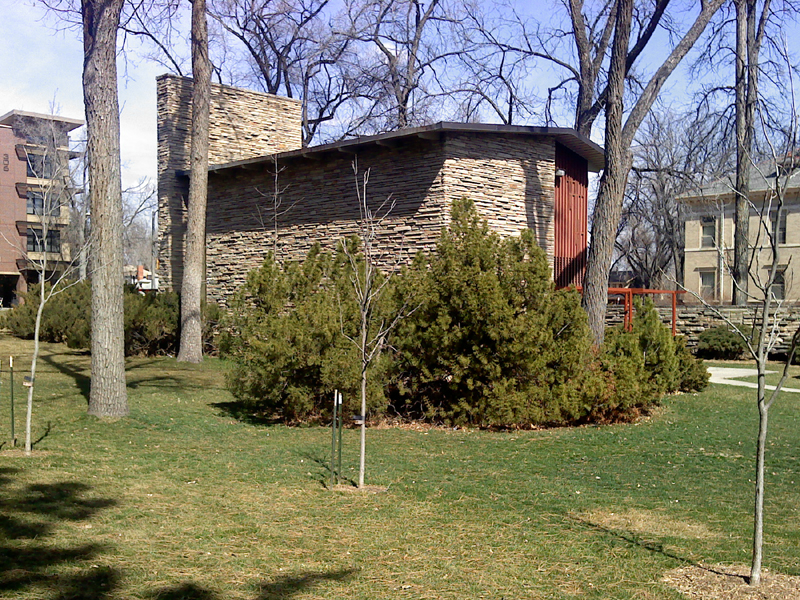
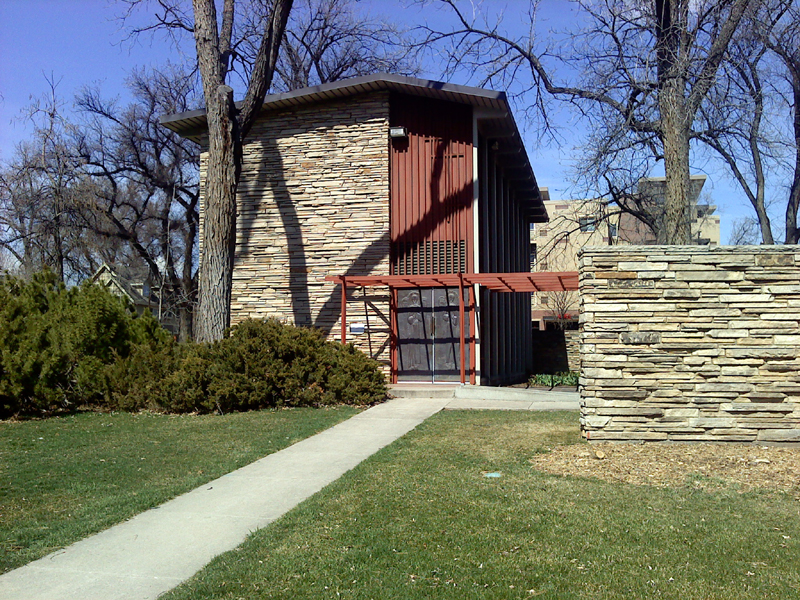
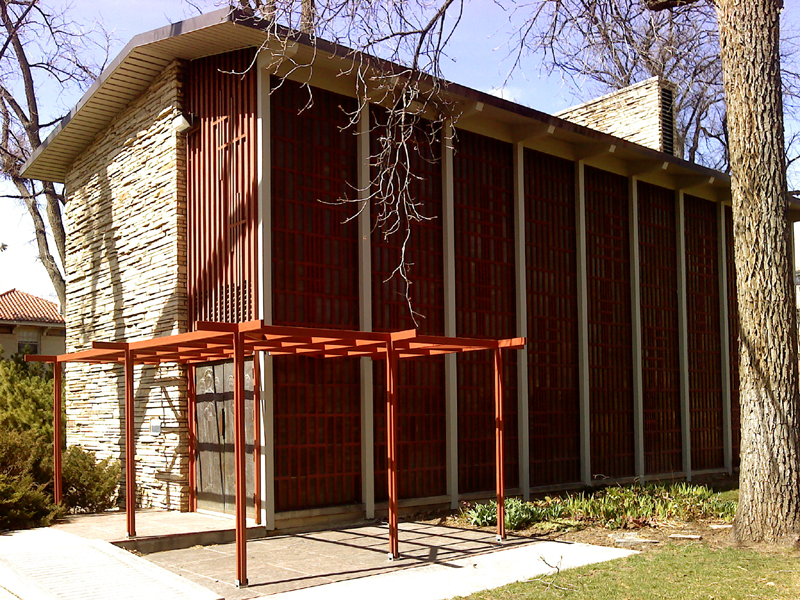
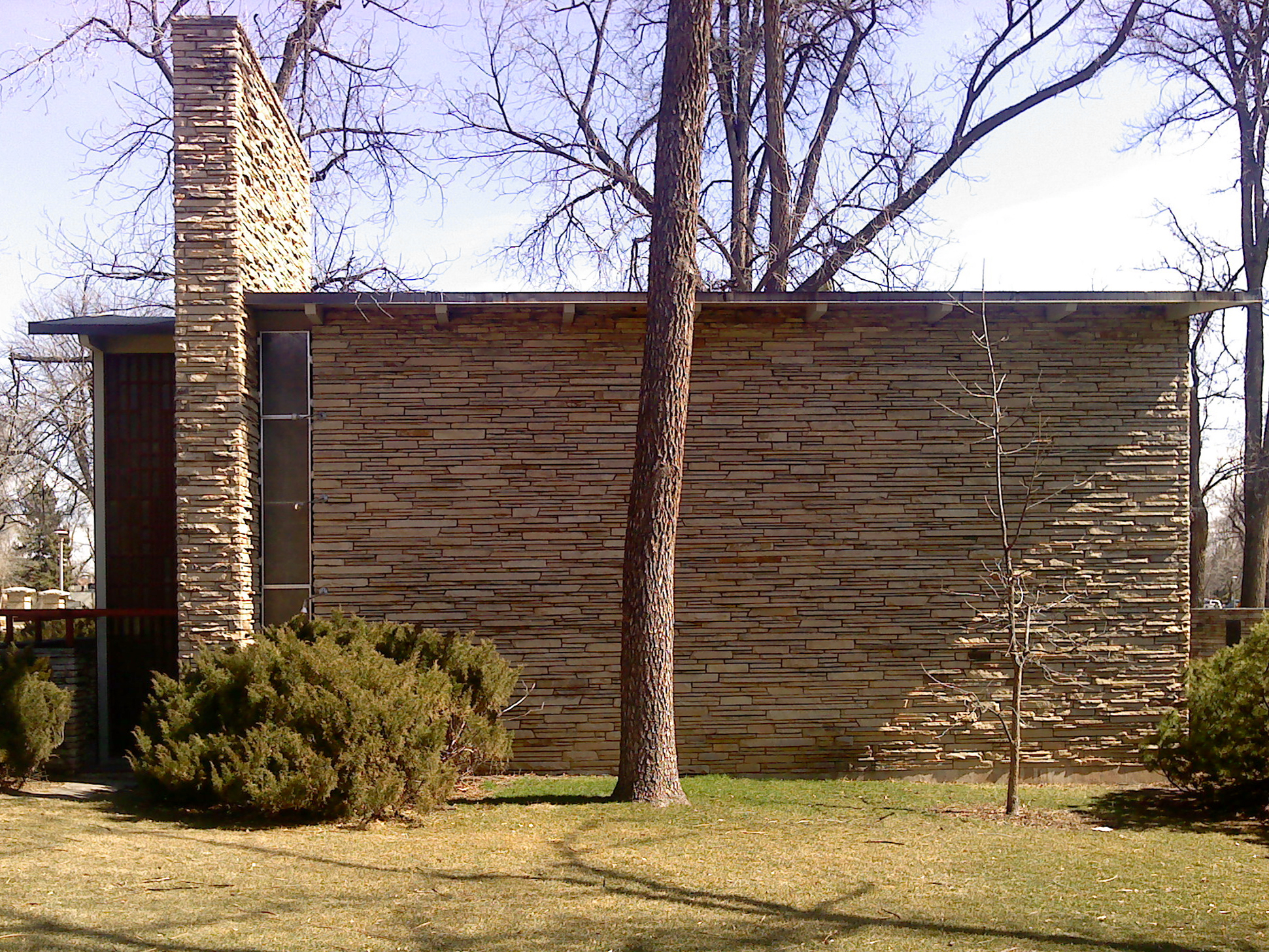
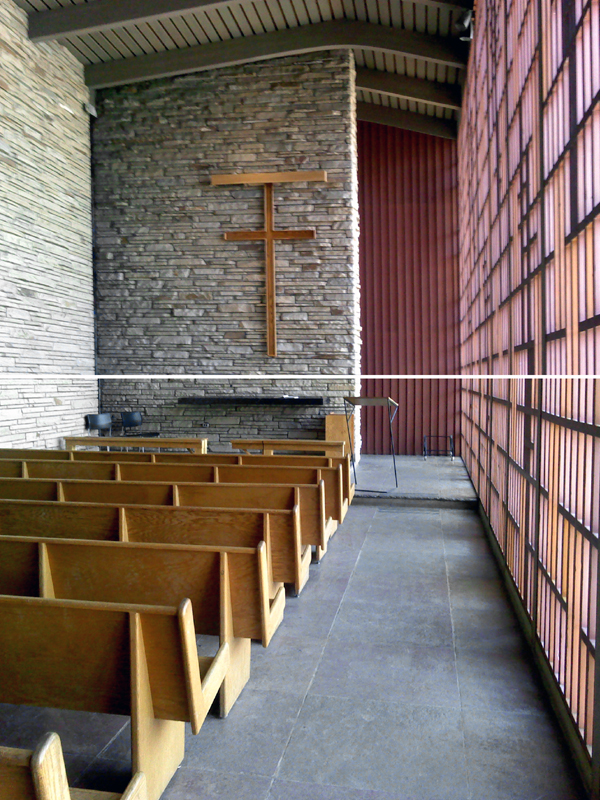
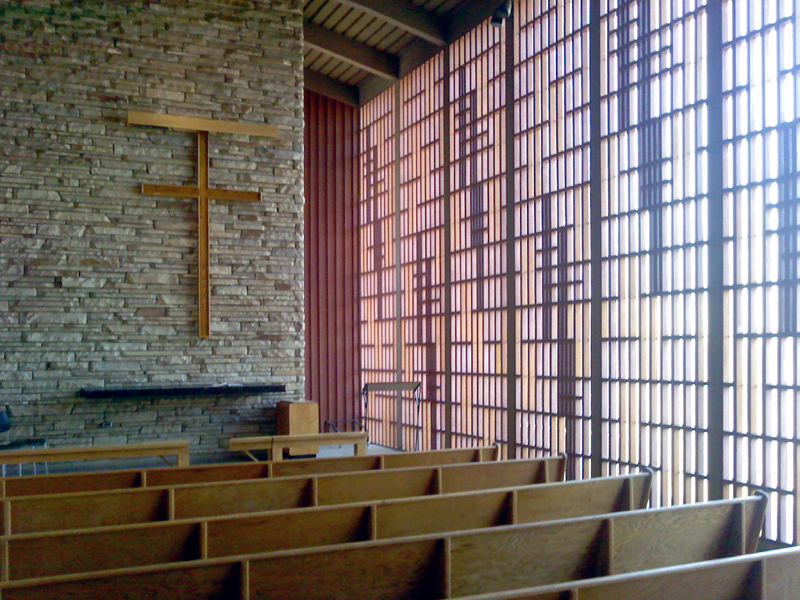
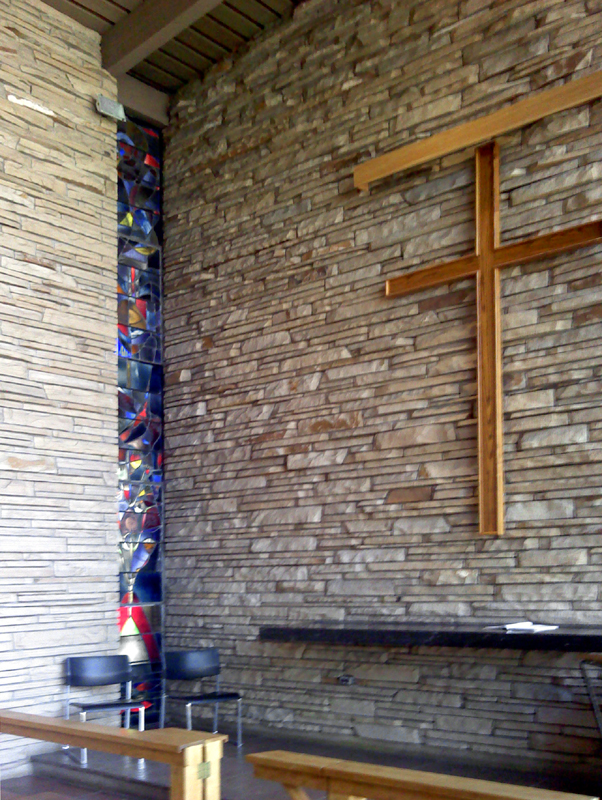
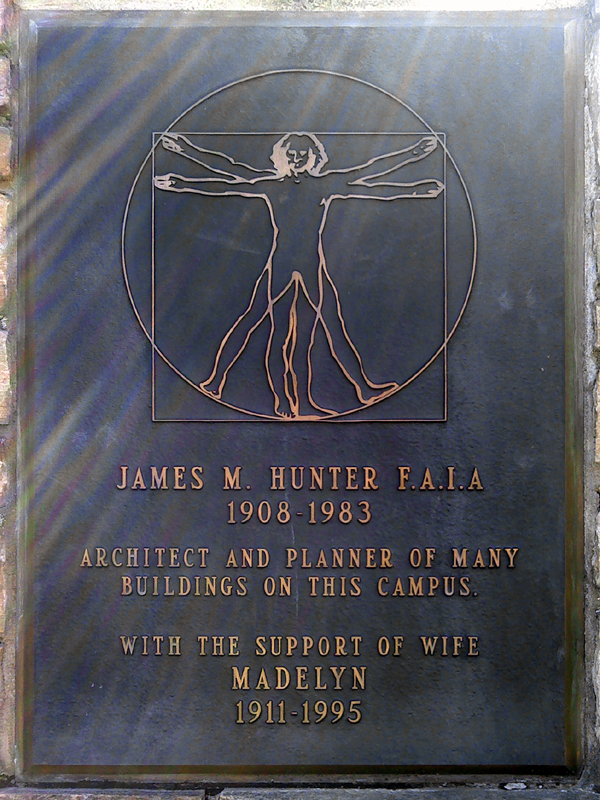
Hunter's Danforth Chapel at CSU

James Hunter, the architect of the George Löf house (discussed in the book and here) and coordinator to the 1957 “Living With the Sun” competition (discussed in the book) was a fine mid-century modern architect in general, apart from his importance to the solar house movement.

Recently I was in Fort Collins, at Colorado State University, where Hunter designed the Danforth Chapel (1954). I took some photos.

In image #4, note the exterior lights, to back-light the stained glass at night.

More:
2011 CSU article

A Hassan Fathy Quotation

Egyptian architect Hassan Fathy was born on this day in 1900. Anyone interested in the history of green building should be aware of his significance. (Here’s a page which provides a nice introduction.)

This is a favorite quotation:

“Any architect who makes a solar furnace of his building and compensates for this by installing a huge cooling machine is approaching the problem inappropriately and we can measure the inappropriateness of his attempted solution by the excess number of kilocalories he uselessly introduces into the building.”

from Natural Energy and Vernacular Architecture (1986)

That book is a major resource on traditional methods of natural cooling in the Middle East. If you want to learn about courtyards, the mashrabiya, the malqaf, and other features, Fathy's book is the place to begin.

I was once told that Fathy was the first person to use the word 'sustainability' in the context of architecture, in the 1930s. I’m still trying to track that down.

Also, a Hassan Fathy oral history recording is available to listen here.

User Behavior

There are several sublimated themes in the history of the solar house that apply to the practice of architecture and green building today.  The first and most important, which I sought to bring to the foreground in The Solar House, is the 'schism' between architecture and engineering.  (Credit, of course, to Sigfried Giedion, who first appropriated that powerful term from religious history.)  The answer to the schism---integrated practice---is a central theme of our time and, in my opinion, essential to the path forward.

Another major issue which surfaces from time to time in the book, and applies to green builders working now, is User Behavior.  The point is this: an efficient structure, by itself, will not guarantee low energy use; the users’ behavior matters considerably.  The most successful energy-saving buildings are invariably a product of both technology and culture.  

How about Hugh Duncan?  He was one of the first important patrons of the solar house (and a rhetorical champion of the concept).  In 1941 he hired Fred Keck to design a house in the Chicago suburb of Flossmoor, which then became the site of scientific study.  Keck and the Libbey-Owens-Ford glass company wanted to quantify how much energy would be saved by Keck's passive solar heating techniques.  Engineers from the Illinois Institute of Technology (IIT) were engaged to instrument the Duncan house and analyze the data.  The experiment was inconclusive, however, in part because Duncan insisted on setting the thermostat at 73˚F and then left the door open---in winter!  The researchers understood they had bad data, and Keck was left supremely frustrated.  (A bit more on the Duncan House here: Keck's Duncan house: a new look)

And User Behavior can mislead historians.  Take Frank Lloyd Wright's "solar hemicycle" for Herbert Jacobs and his family (Madison, 1944).  Wright's structure was brilliant for its poetic expression of the solar path, and properly designed in cross-section, but it had serious thermal problems.  As I explain in the book, the house was essentially uninsulated, and required a tremendous amount of heating in addition to the passive solar gains.  The mezzanine-level bedrooms were essentially unheated, and the family would dress together each morning in the large bathroom, which contained a radiator.  The fascinating aspect of User Behavior, in this case, was that the Jacobses were so tolerant of discomfort.  Despite the fact that their dwelling had major flaws, they became solar house advocates and (perhaps unwittingly) helped hide those flaws from the historical record.

Today, User Behavior beguiles architects and engineers, most notably in the form of plug loads.  (The term 'plug loads' describes the energy use in a building as a result of equipment that is plugged-in, not really part of the permanent architecture and not controlled by the building design.  Plug loads account for roughly 25% of total electricity consumed within office buildings, according to the GSA.)  In Sustainable Construction: Green Building Design and Delivery, Charles Kibert says the modeling of plug loads is "inaccurate because the behavior of the building users is unpredictable."  Space-heaters and fans are notorious offenders because the building's permanent equipment is supposed to be designed to keep people comfortable.

How profound is User Behavior?  A 2012 study found that, in office spaces, "austere" occupants can achieve 50% energy savings compared to "regular" occupants, and "wasteful" occupants may use up to 89% more energy than regular (Hong & Lin, "Occupant Behavior: Impact on Energy Use of Private Offices," 2012).

New York City's Bank of America Tower, completed in 2010, is now the canonical example of User Behavior undermining good design.  The building, which has several commendable green features, became the subject of scandal due to exorbitant electricity use.  (The scandalizing article is here.)  It turned out not to be a scandal at all---the tenants have extremely high computer use and enormous server farms; it's almost more akin to a data center than an office building.  You can't blame the building designers for that, although it would have been better if they could have anticipated the demand.